

Venezia_2017_PAT parametric terracotta
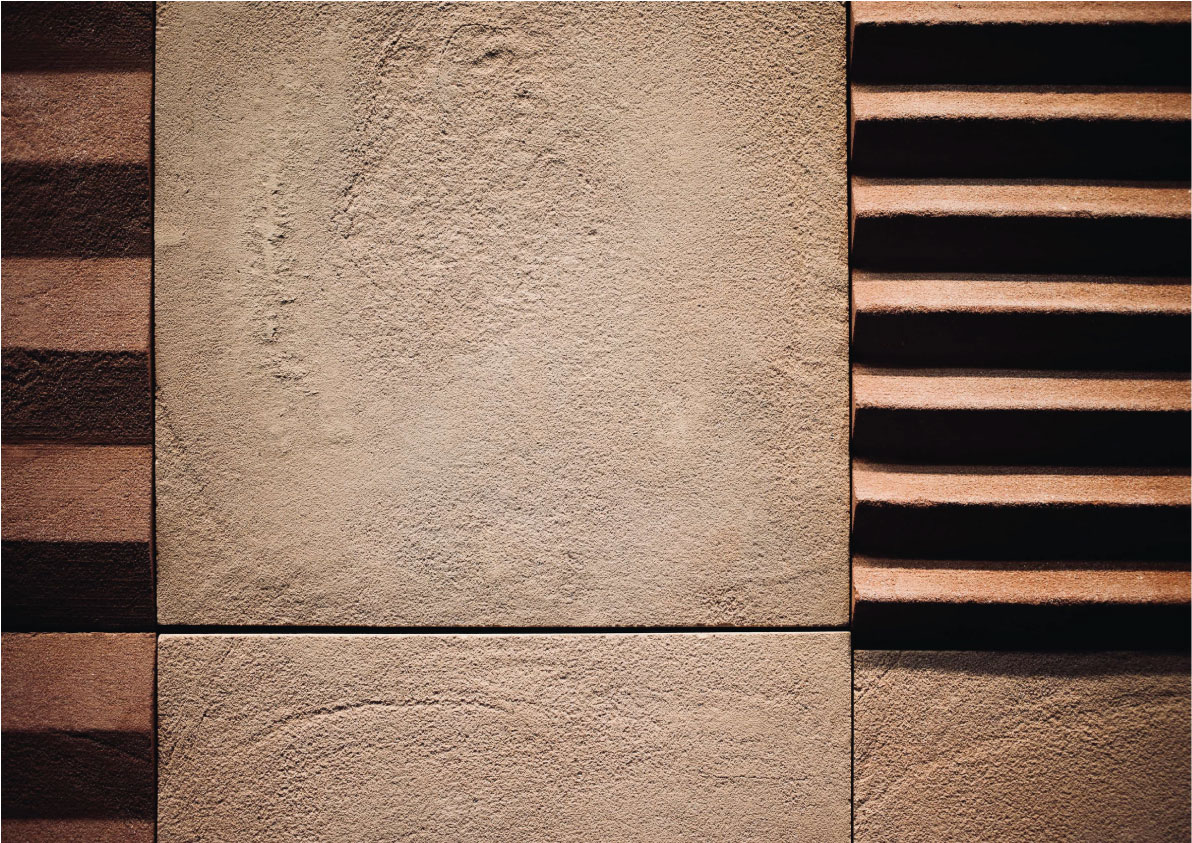
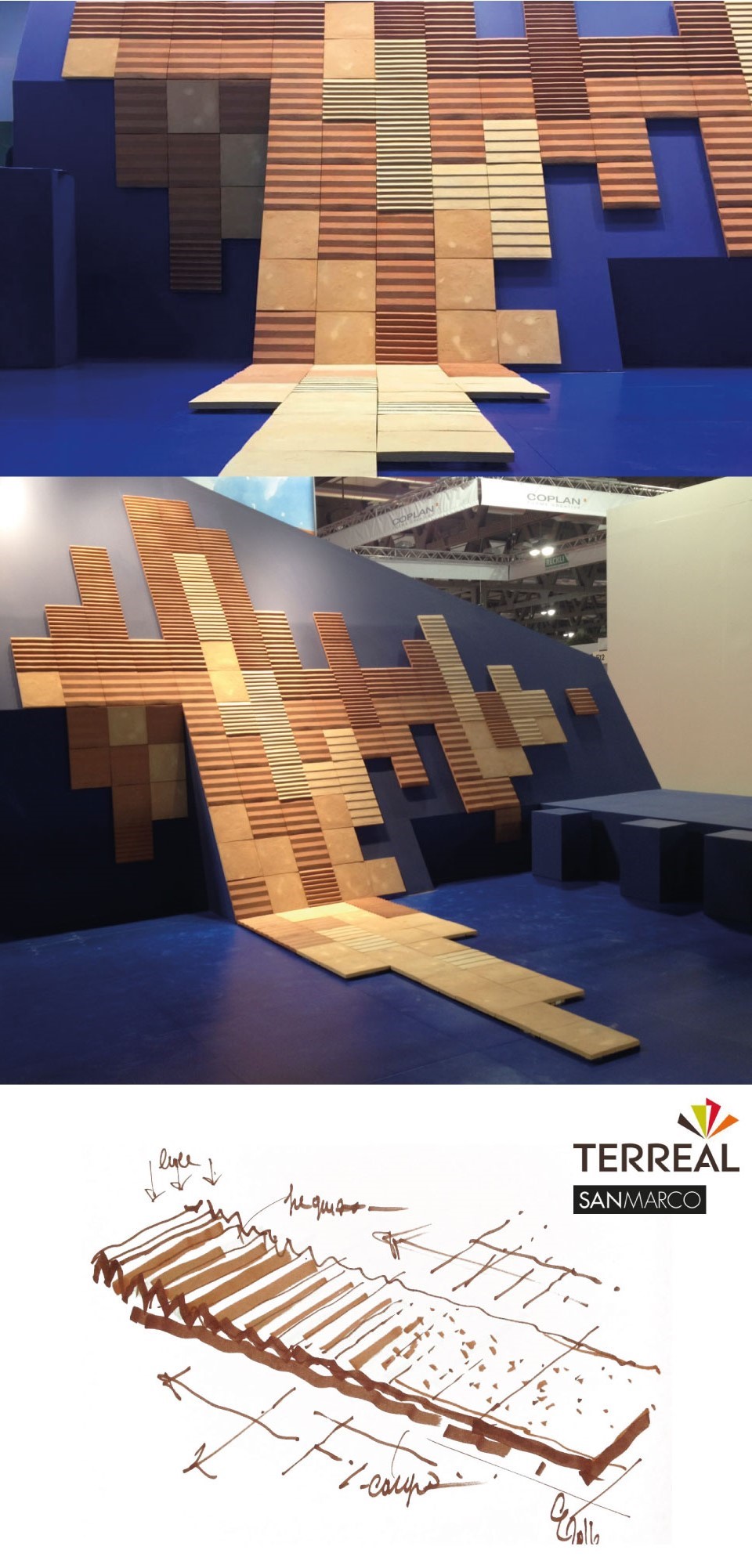
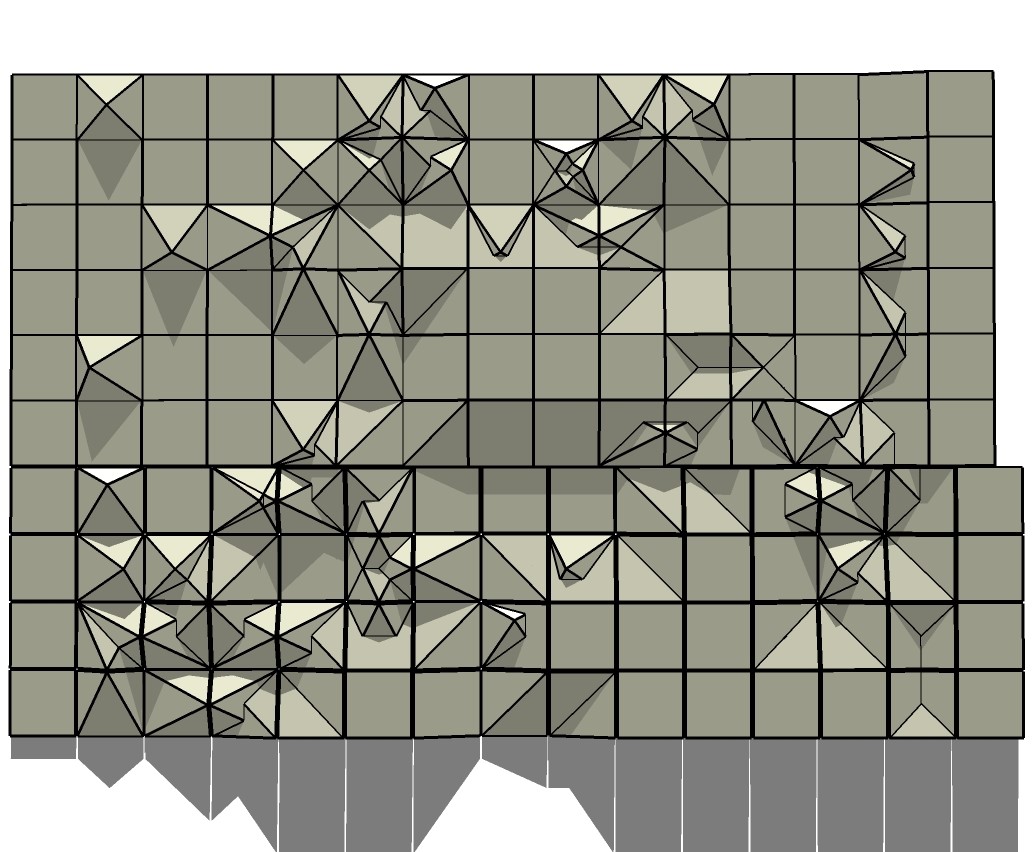
PAT è un sistema di superficie ventilata in laterizio composto da moduli 25x25x3cm, progettato per la Terreal San Marco per rivestire involucri architettonici sia in facciata che copertura.
I moduli sono caratterizzati da pieghe geometriche sviluppate con algoritmi parametrici, in modo da consentire di autombreggiare le superfici esterne e ridurre passivamente gli apporti di calore all’interno in estate.
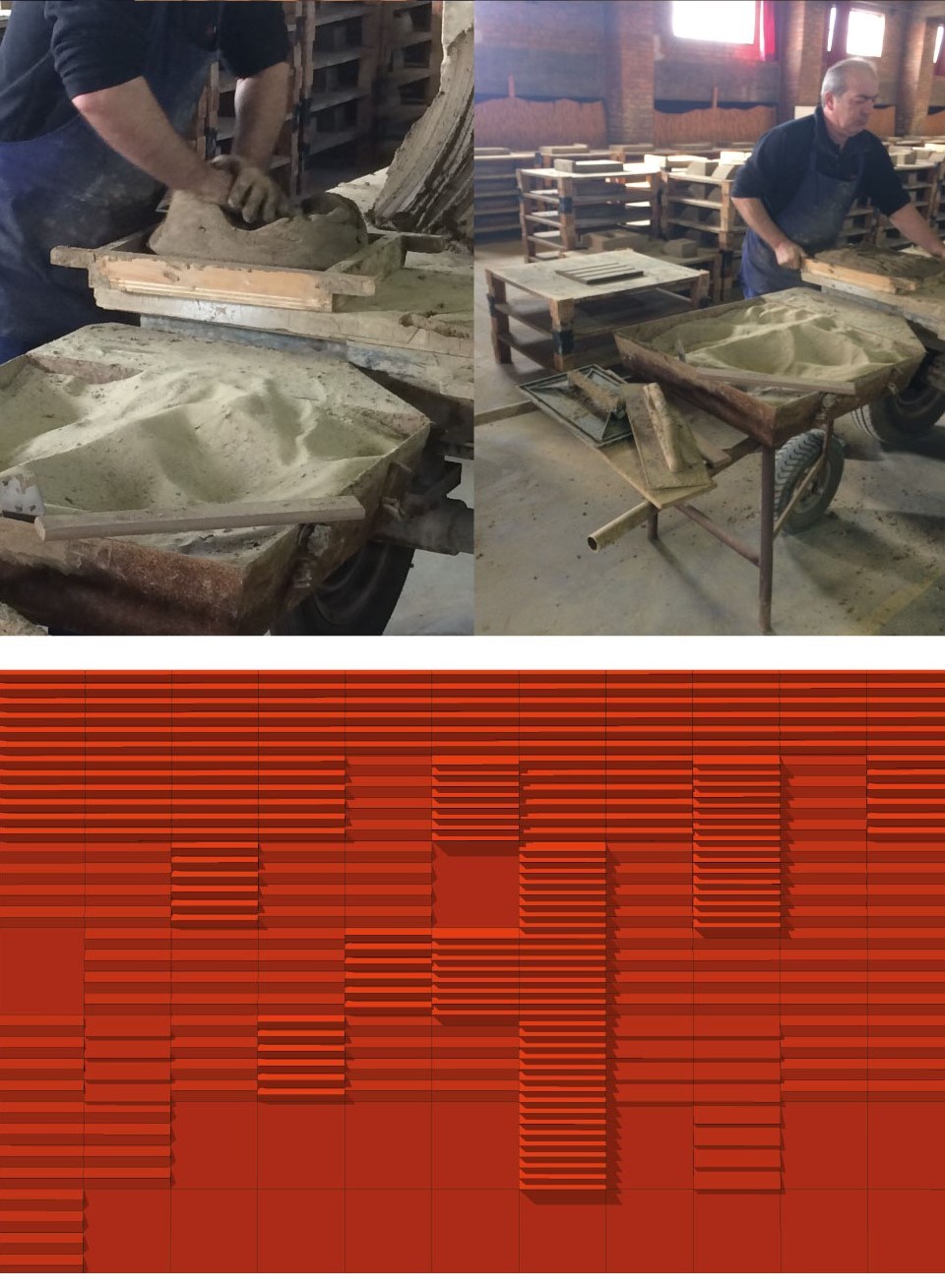
I componenti sono prodotti per pressatura a mano di tre tipologie di crete in stampi in legno realizzati con macchine CNC e studiati in relazione all’incidenza solare, per poi essere inseriti nel ciclo standard produttivo di essiccazione e cottura industriale.
PAT is a brick ventilated surface system made up of 25x25x3cm modules, designed for the Terreal San Marco to cover both facade and roof architectural envelopes.
The modules are characterized by geometric folds developed with parametric algorithms, so as to allow the external surfaces to self-shade and passively reduce the heat gains inside in the summer.
The components are produced by hand pressing of three types of clay in wooden molds made with CNC machines and studied in relation to solar incidence, to then be inserted into the standard production cycle of industrial drying and firing.


Padova_2016_Lotus seggiolino per bici per bambini
La geometria di Lotus è stata progettata per l’azienda Bellelli con un processo di reverse engineering, acquisendo un modello in creta e sviluppando varianti parametriche vincolate alla stringente normativa si sicurezza prestazionale europea.
La superficie in ABS non ha richiesto pieghe di irrigidimento, ma è stata innervata da un pattern a nido d’ape ventilato in grado di assorbire gli sforzi strutturali, consentendo di utilizzare il quantitativo di materiale strettamente necessario e ridurre i costi di produzione .
La prototipazione CNC ripetuta in fase di progetto, ha consentito di arrivare alla realizzazione dello stampo azzerando criticità ed imprevisti, consegnando al mercato una seduta liscia a guscio e di design organico innovativo per il settore .
The Lotus geometry was designed for the Bellelli company with a reverse engineering process, acquiring a clay model and developing parametric variants bound by the stringent European performance safety regulations.
The ABS surface did not require stiffening folds, but was innervated by a ventilated honeycomb pattern capable of absorbing structural stresses, making it possible to use the strictly necessary quantity of material and reduce production costs.
The CNC prototyping repeated in the design phase, has made it possible to achieve the creation of the mold by eliminating criticalities and unexpected events, delivering to the market a smooth shell seat and an innovative organic design for the sector.


Roma_2011_Sistema luce e segnaletica Flap
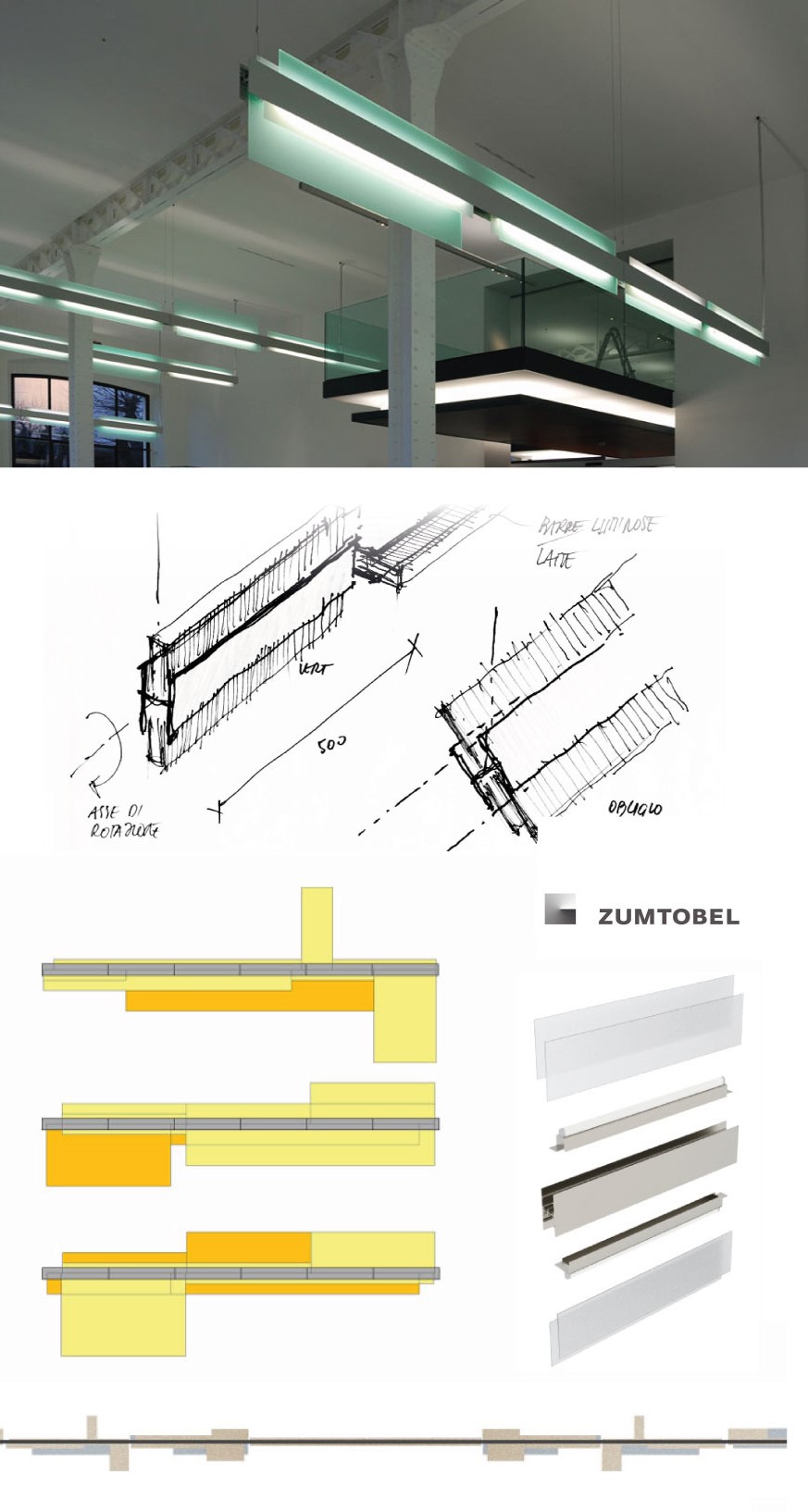
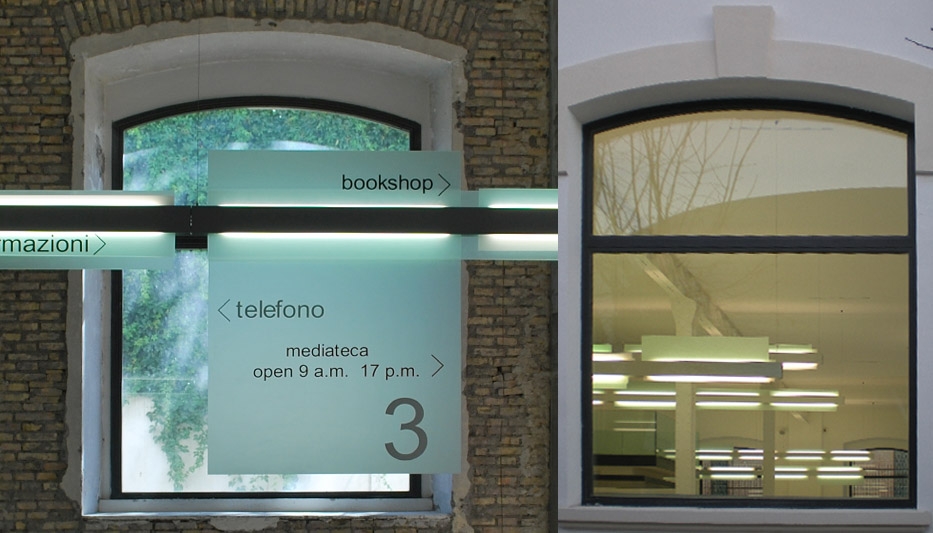
Flap è lo sviluppo del binario Tren, a catalogo della Zumtobel group da molti anni, utilizzato solo come vettore elettrico a sospensione.
L’inserimento di piani in policarbonato colorati come diffusori luminosi, ha consentito di ottenere segnaletiche in linee virtualmente infinite, di configurazioni sempre diverse e modificabili nel tempo.
Con speciali giuntaggi, è possibile collocare sorgenti luminose a puntuali, lineari e a sospensione di ogni forma e dimensione.
Flap is the development of the Tren track, which has been in the Zumtobel group catalog for many years, used only as a suspended electric carrier.
The insertion of colored polycarbonate surfaces as luminous diffusers has made it possible to obtain signs in virtually infinite lines, of ever-changing and changeable configurations over time.
With special joints, it is possible to place spot, linear and suspended light sources of any shape and size.
Roma_2011_bookshop Mondadori Electa la Lanterna
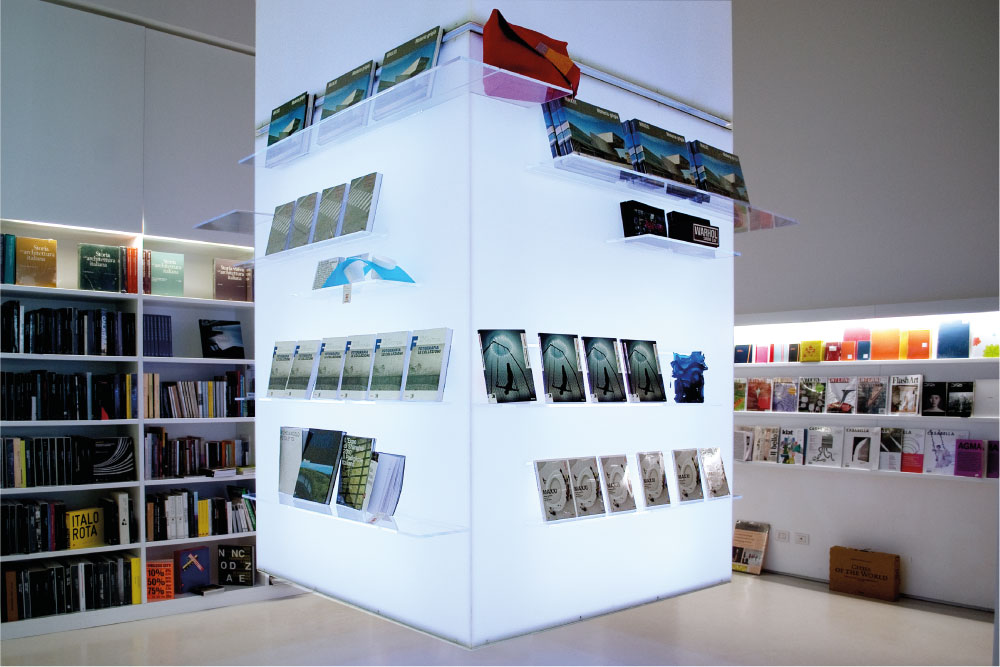
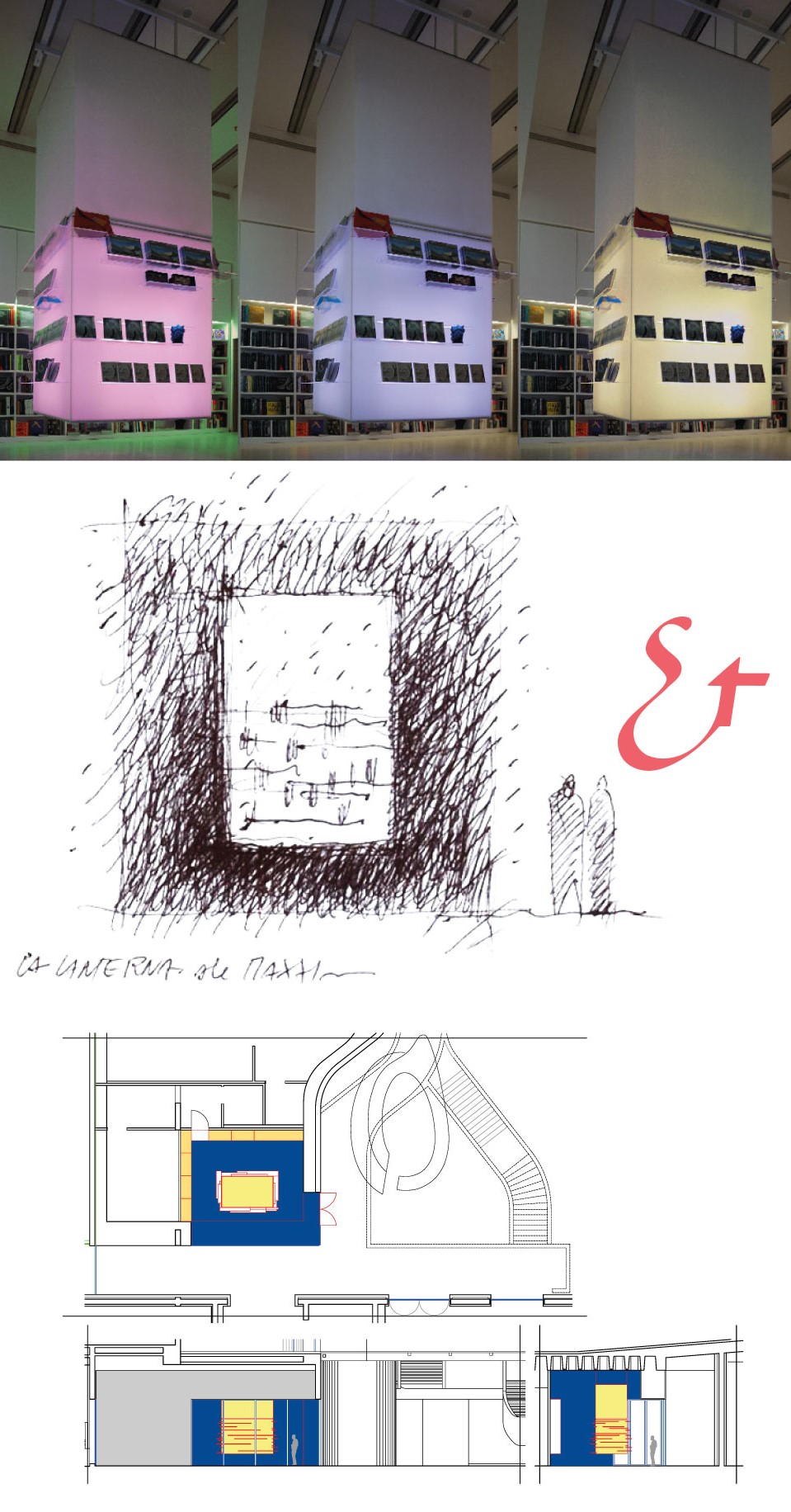
Il primo bookshop del MAXXI è stato caratterizzato dalla presenza una lanterna luminosa in policarbonato opalescente, sospesa in uno spazio compatto piccolo e molto alto, sulla quale vengono esposti in controluce i cataloghi e le novità editoriali.
Il dimmeraggio delle luci e colori interni, programmabili in base alle ore e alla affluenza, l’ ha resa nel tempo un segnale discreto ma visibile dalla hall di ingresso, in grado di attirare l’interesse senza distogliere dall’orientamento espositivo.
The first MAXXI bookshop was characterized by an opalescent polycarbonate luminous lantern, suspended in a small and very high compact space, on which catalogs and new publications are displayed against the light.
The dimmering of the lights and internal colours, which can be programmed according to the hours and the turnout, has made it a discreet but visible signal from the entrance hall over time, capable of attracting interest without distracting from the exhibition orientation.
Venezia_2018_sistema espositivo Holo per Augmented Reality
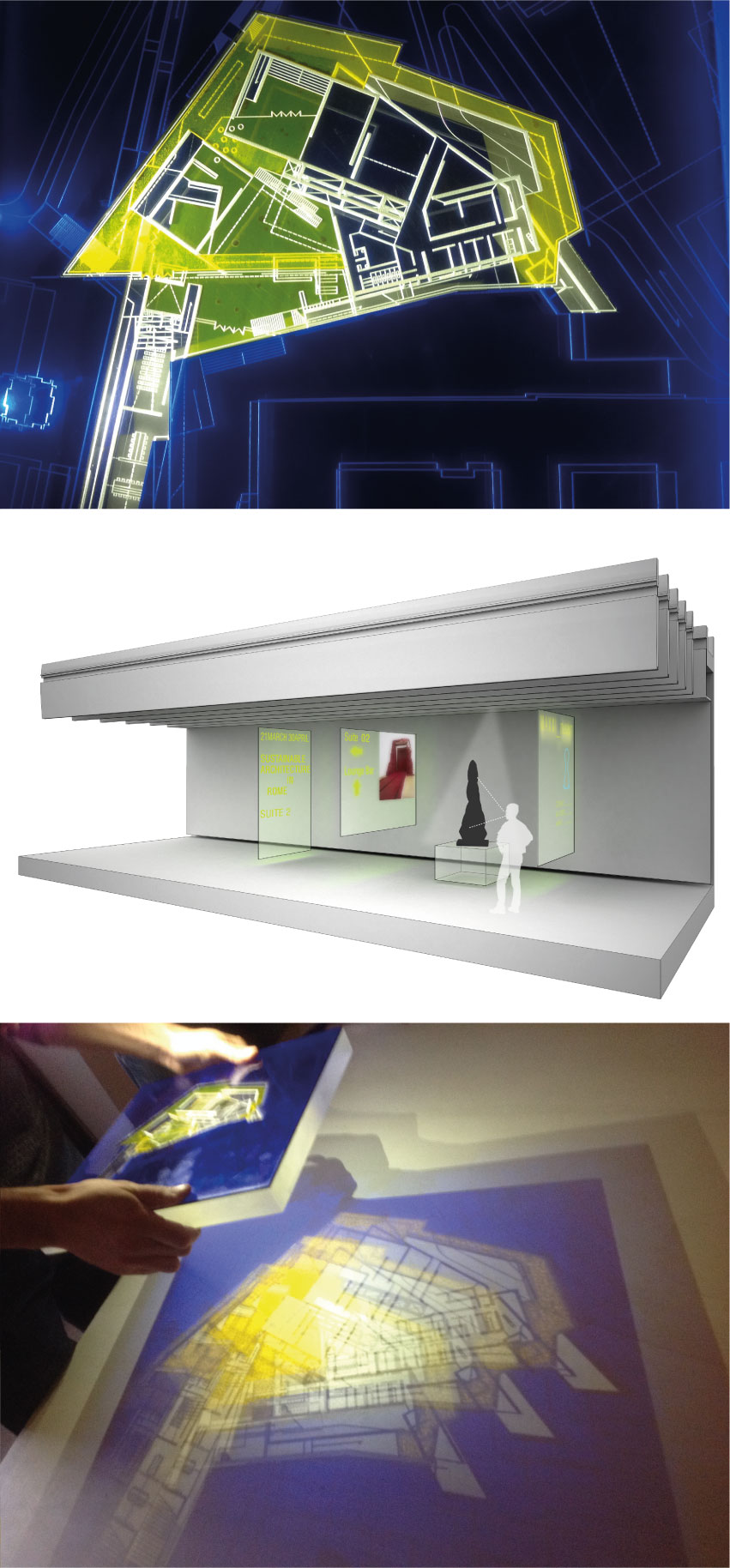
Holo è un innovativo processo di incisione CNC su supporti in policarbonato stratificato e di retinature colorate, in grado di ricevere e proiettare luce, trasformandoli in suggestioni volumetriche.
Per la comunicazione espositiva architettonica, consente di scomporre e ricomporre le informazioni, lasciandosi attraversare dallo sguardo combinandosi con modelli tridimensionali.
L’aggiunta di proiezioni e tag integrati, consente esperienze di realtà aumentata a costi estremamente contenuti.
Holo is a innovative CNC engraving process on stratified polycarbonate supports and colored screens, capable of receiving and projecting light, transforming them into volumetric suggestions.
For architectural exhibition communication, it allows you to decompose and recompose information, allowing the gaze to pass through it, combining with three-dimensional models.
The addition of projections and integrated tags, allows augmented reality experiences at extremely low costs.
Roma_2019_mattonella ceramica Enameru
Realizzata con il maestro ceramista Maurizio Gualdi, la collezione Enameru è composta da combinazioni di varianti parametriche di pattern piramidali, realizzati con algoritmi digitali e scavati al negativo in stampi in mdf con CNC.
La mattonella 10×10 cm viene prodotta dal colaggio della creta liquida negli stampi, l’essiccazione, una prima cottura e poi la smaltatura con tecnica tradizionale giapponese.
Il processo si completa con la cottura in riduzione d’ossigeno tra i 900 e i 1000 gradi, creando una affascinante frizione tra le geometrie digitali e le coloriture organiche e impreviste del glazing orientale.
Created with the master ceramist Maurizio Gualdi, the Enameru collection is composed of combinations of parametric variants of pyramidal patterns, created with digital algorithms and carved in the negative in mdf molds with CNC.
The 10×10 cm tile is produced by pouring the liquid clay into the moulds, drying it, firing it first and then glazing it using the traditional Japanese technique.
The process is completed with the firing in oxygen reduction between 900 and 1000 degrees, creating a fascinating friction between the digital geometries and the organic and unexpected colors of oriental glazing.

Venezia_2018_piastrella di rivestimento in vetro Soundscape
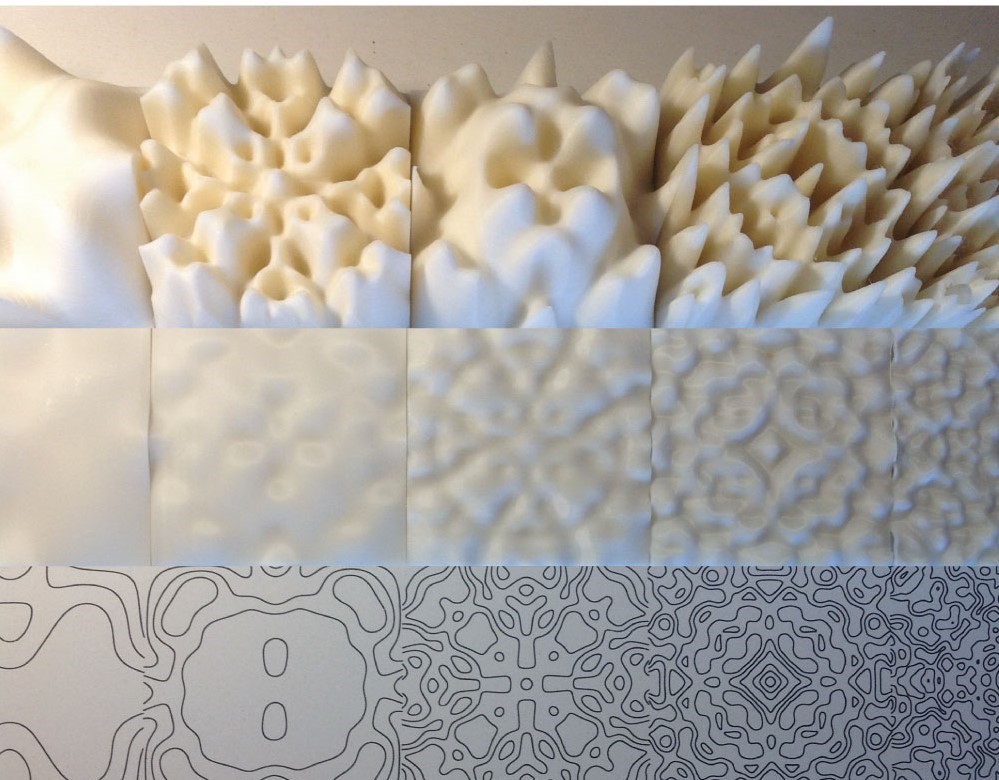
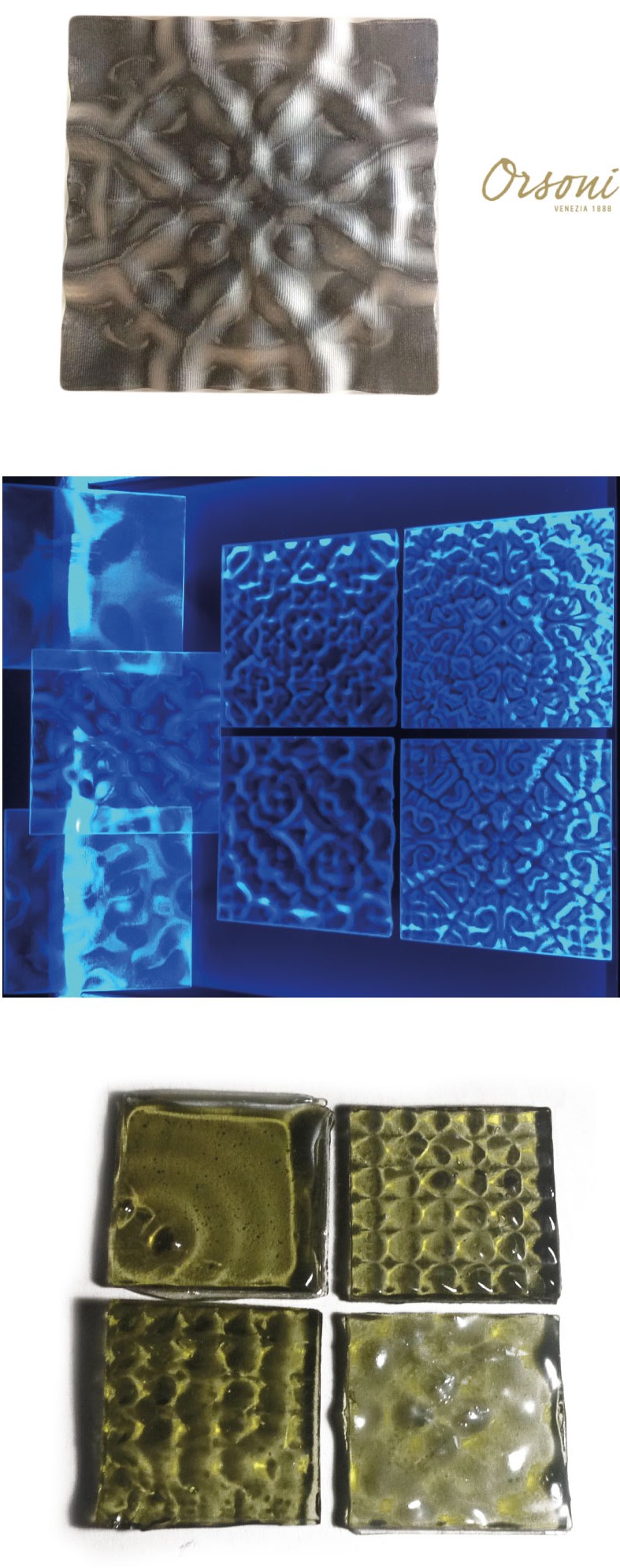
Studiata per l’antica fornace Orsoni di Venezia, è stata realizzata attraverso la riproduzione in volumi digitali tridimensionali dei suoni, la loro sezionatura e proiezione in pattern bidimensionali alle diverse frequenze.
Le superfici prodotte da questo editing sono state successivamente scavate in gesso refrattario, ed utilizzato per il colaggio della pasta vetrosa in fornace.
Le piastrelle prodotte rappresentano dunque la straordinaria impronta sonora di note o accordi specifici prossimi alle curve di Chladni, ovvero gli insiemi di geometrie in grado di rendere visibile cio’ che si puo’ solo sentire, cui va ad aggiungersi la rifrazione luminosa del vetro.
Studied for the ancient Orsoni furnace in Venice, it was created through the reproduction of sounds in three-dimensional digital volumes, their sectioning and projection in two-dimensional patterns at different frequencies.
The surfaces produced by this editing were subsequently excavated in refractory plaster, and used for the casting of the vitreous paste in the furnace.
The tiles produced therefore represent the extraordinary sound imprint of specific notes or chords close to the Chladni curves, or rather the sets of geometries capable of making visible what can only be heard, to which must be added the luminous refraction of the glass.
 pan_architectures